
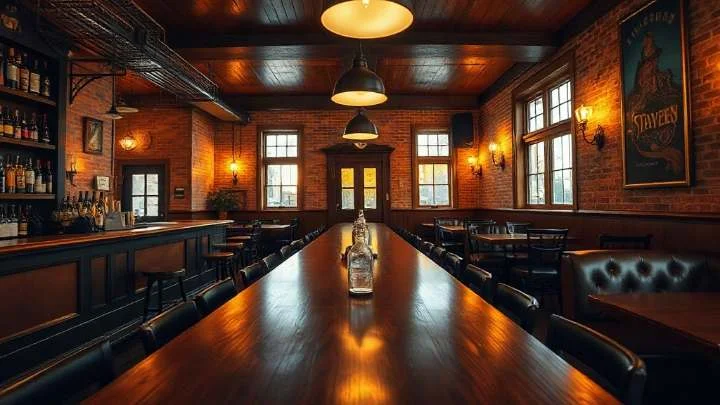
Kern County · Type 48
Kern County Type 48 Liquor Licenses For Sale
Kern County, CA
Type 48
On-Sale General, Public Premises
Today a Kern County Type 48 comes only by buying an active license from its holder, with ABC approving the transfer. New general licenses come only in ABC's yearly September priority period, and the 2026 one closed on September 25. Kern had 51 active Type 48s in ABC's export of November 10, 2026. ABC's 2026 notice put Kern's "New On-Sale" figure at 25, shared with Type 47 restaurants. As of November 10, 2026, a new Type 48 there skipped any drawing: Kern sat on ABC's no-drawing list for "Original On-Sale General", and original means brand new to ABC.
Supply here
Licenses held now, and how ABC adds new ones
According to ABC's Daily Data Export, Kern County has 51 Type 48 licenses in active status. ABC's update stamp on that file reads November 10, 2026, and the file was retrieved the same day. A purchase works by settling a deal with the holder of a license already issued, after which ABC has to approve the transfer (the 51 counts licenses in active status, not licenses for sale); moving a Type 48 to a different Kern address is also generally possible, subject to ABC approval and zoning compliance at the new site.
Kern is also where the seller must be. Apart from the yearly priority filing, ABC's priority drawings FAQ allows just one way to a general license: buying an existing license of the same type from a holder in the county where the licensed premises will be. A Kern bar therefore buys from someone who already holds a Kern County Type 48, and ABC's Transfer or Change a License page (both retrieved November 15, 2026) names that change of owner a person to person transfer, the "Transfer of an existing license to a new owner."
A quota governs new Type 48s. ABC's priority drawings FAQ, retrieved November 10, 2026, puts 48 on its short list of general license numbers open to priority application, the others being 21, 47, 57 and 75, and allows those applications in one designated window per year. Population drives each county's limit: by applying a ratio fixed in statute and a maximum, ABC decides how many general licenses of every type, possibly none, a county may gain. ABC also fixes when that window falls: according to the same FAQ, retrieved November 15, 2026, it starts each September on the second Monday and stays open for at least five business days.
ABC published this year's numbers in an August 17, 2026 notice (retrieved November 10, 2026) naming the counties that qualify for extra on-sale general and off-sale general licenses, and Kern's row carries 25 in the column headed "New On-Sale". That 25 is a single county figure for on-sale general licenses; the notice does not split it into bars applying for a Type 48 and restaurants applying for a Type 47, so it is a pool both draw from, not a tally of new Type 48s. Kern's row also shows 25 under inter-county on-sale, the number of on-sale general licenses that could be moved into Kern from another county through that same yearly priority process, which ABC's priority FAQ (retrieved November 15, 2026) describes as a general license "being transferred from one county to another county"; it too is one figure for the whole county, not split by license type.
Anyone in Kern who wanted a brand-new Type 48 in 2026 had to apply between September 14 and September 25, 2026: that was the period ABC's August 17, 2026 announcement gave local ABC offices to accept applications for new original on-sale general and off-sale general licenses, and priority applications to move general licenses between counties. Where a county had more applicants than licenses, ABC held virtual drawings in late October 2026, according to its Priority Registration Drawings page (both retrieved November 15, 2026).
Kern County also turns up on ABC's no-drawing county list (retrieved November 10, 2026), with "Original On-Sale General" listed under the county's name, a label that names no license type number. In ABC's ABC-217 instructions, retrieved November 15, 2026, the entry for "Original" reads "A new license", and a Type 48 is an on-sale general license, so as the list stood on November 10, 2026, a newly issued Type 48 in Kern did not require a drawing.
Last checked November 10, 2026.
Class rules are confirmed for your specific premises during qualification, and nothing on this page is legal advice.
Local rules
County zoning for a bar outside Kern's cities
The county rules below come from Kern County's own zoning code and planning paperwork, and they reach unincorporated land alone. Under Section 19.02.030 (retrieved November 11, 2026), Title 19, the zoning ordinance, covers every property in the county's unincorporated area; bars within an incorporated city fall under that city's code. The zoning code is Title 19 as of its February 16, 2026 edition, published by the Planning and Natural Resources Department, and the paperwork is that department's Form 116.
Six districts where a bar is a permitted use
Six districts name "Bar, tavern, or cocktail lounge" as a permitted use, a listing that also takes in uses found similar under Sections 19.08.030 through 19.08.080; in every one of them the use must meet Chapter 19.80's standards and procedures:
- Neighborhood Commercial (C-1): Section 19.30.020, item C.4, retrieved November 11, 2026
- General Commercial (C-2): Section 19.32.020, item C.4, retrieved November 11, 2026
- Highway Commercial (CH): Section 19.34.020, item C.4, retrieved November 11, 2026
- Light Industrial (M-1): Section 19.36.020, item D.4, retrieved November 11, 2026
- Medium Industrial (M-2): Section 19.38.020, item D.4, retrieved November 11, 2026
- Heavy Industrial (M-3): Section 19.40.020, item D.4, retrieved November 11, 2026, where the entry is worded in the plural
Bars appear on no district's conditional use list (Title 19, February 2026 edition, retrieved November 11, 2026).
How Title 19 defines a bar
In Section 19.04.069 (retrieved November 11, 2026), a bar is any structure, or portion of one, whose primary use is selling or dispensing liquor by the drink. The same use lists carry restaurants as an entry of their own, "Restaurant, cafe, or coffee shop".
Plot plan review
Since each of those permitted-use entries routes the bar use through Chapter 19.80, Section 19.80.040 (retrieved November 11, 2026) comes into play: save where that section says otherwise, the Planning Director must sign off on a plot plan review before such a use is set up or any building or grading permit for it is issued. Exempt cases include moving from one permitted use to another with no building permits needed, and additions growing the parcel's gross building area by 50 percent or less, provided no new dwelling units result. Nothing in this review is aimed at alcohol in particular.
Public convenience requests (Chapter 19.116)
Kern's public convenience procedure sits in Chapter 19.116 and runs whenever the county is asked to find that a liquor license issuance, upgrade or transfer under the state Business and Professions Code serves the public convenience. The chapter is silent on license types; state law decides whether a given Type 48, new or transferred, needs that finding.
- Filing: the request goes in to the Kern County Planning Department, in an application format of the Planning Director's choosing (Section 19.116.020.A, retrieved November 11, 2026).
- What the file must hold, at minimum: a short case for why the license serves the public convenience, a copy of the ABC application, and a list naming and locating every other liquor licensee in a 500-foot radius of the proposed site. That radius only shapes the list and imposes no spacing between a bar and other licensees (Section 19.116.020.B, items 5 to 7, retrieved November 11, 2026).
- Notice: once every required item is in and the filing fee has been paid, the Planning Department has to mail notice to each property owner and each existing liquor licensee located within 500 feet, at least 10 days ahead of the hearing, and send one more to the Kern County Sheriff's Department (Section 19.116.030, retrieved November 11, 2026).
- Decision: at a public hearing the Board of Supervisors weighs spoken and written testimony, with a Planning Department staff report written in advance, and closes the matter by adopting a resolution whose findings set out the outcome (Section 19.116.040, retrieved November 11, 2026).
Procedure is all the chapter supplies; it states no test for granting or refusing.
Form 116
Form 116 (10/2024), titled Request for Liquor License Determination, comes from the Planning and Natural Resources Department and is paperwork, not law. It does not cite Chapter 19.116, yet it asks for the same information as the chapter's minimum list. Page 3 (Form 116, page 3, retrieved November 11, 2026) attaches Preliminary Review fees to processing and states that the department's policy does not extend to processing liquor license applications for a project site where no structure or development exists yet. That page (Form 116, page 3, retrieved November 11, 2026) also lets the department ask for extra material, beyond the copy of the ABC filing, before it continues: one listed item is a floor plan on an 8.5 by 11 inch sheet marking where alcohol will be stored, where the front doors will be and where the cash register will stand.
Adult businesses
An adult business regulated under Chapter 19.89 may not have alcoholic beverages served, sold or consumed on its premises; the ban is one of that chapter's performance standards (Section 19.89.040.B.1, retrieved November 11, 2026).
Questions
Site and supply questions for a Kern bar
Which figure does ABC's August 17, 2026 notice give Kern under "New On-Sale"?
Twenty-five. That number covers on-sale general licenses as a group, so a bar applying for a Type 48 and a restaurant applying for a Type 47 draw on the same countywide 25, and the notice gives bars no figure of their own. Applications for them could be made only within ABC's yearly priority period, a September stretch of at least five business days beginning on that month's second Monday; Kern's 2026 filing ran from September 14 to September 25. With "original" standing for "A new license" in ABC's ABC-217 instructions, Kern's listing for "Original On-Sale General" on the no-drawing list of November 10, 2026 meant a new Type 48 there needed no drawing.
Where outside Kern's cities may a bar open as a permitted use?
Six districts list it that way: Neighborhood Commercial (C-1), General Commercial (C-2), Highway Commercial (CH), and Light, Medium and Heavy Industrial (M-1 to M-3). In all six the use is subject to Chapter 19.80, so the Planning Director's approval of a plot plan review comes first unless Section 19.80.040 exempts the project, as it does for a switch between permitted uses that needs no building permit. None of the districts treats a bar as a conditional use.
Does Kern's zoning code treat a Type 48 venue as a bar or a restaurant?
A venue run mainly for drinks fits the county's definition of a bar: Section 19.04.069 describes a structure, or part of one, used primarily to sell or dispense liquor by the drink. Restaurants appear separately in the same use lists, as "Restaurant, cafe, or coffee shop"; the six districts in the answer above are the ones that list the bar entry as a permitted use.
Class basics
Type 48 in brief, and Kern's other class pages
Bars and night clubs are what the Type 48 (On-Sale General, Public Premises) is made for: beer, wine and distilled spirits can all be sold under it for guests to drink on the premises, and beer and wine may also leave with them. A Kern bar holding one need not serve food at all, but it may not let anyone under 21 enter and stay.
A fuller account of the class sits in our Type 48 guide.
These Kern County pages cover the other classes, among them packaged sales to take away and alcohol served with meals:
Who you are dealing with
The desk behind the book
Broker
Liquor License Agents
Escrow held by
A licensed escrow holder
Tell us what you need
Ask the desk about a Kern bar license
Since six commercial and industrial districts in unincorporated Kern list bars as permitted, tell the desk the site's zoning and address via the inquiry form or by phone at (800) 799-9081.
Or call the desk on (800) 799-9081.