
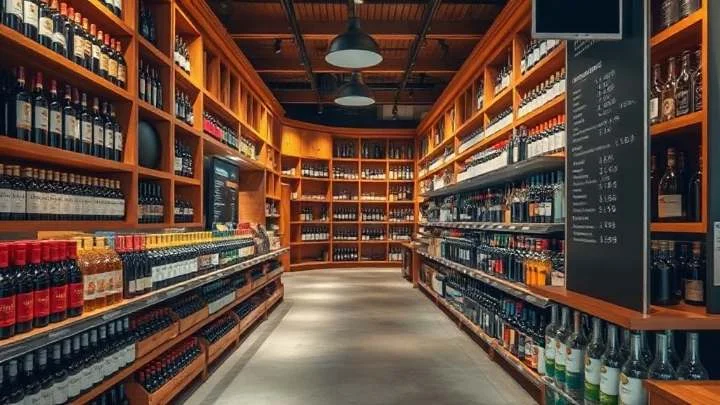
Marin County · Type 21
Marin County Type 21 Liquor License For Sale
Marin County, CA
Type 21
Off-Sale General
In Marin County, a Type 21 is available today through transfer, by purchasing a license ABC already issued to someone else in this county; ABC counts 100 active countywide. Fresh general licenses come from a county quota that ABC sets by population and opens in a priority application period each September; the 2026 period ran from September 14 to 25. ABC's August 17, 2026 announcement of counties eligible for additional general licenses has no row for Marin County, and that absence is not a zero.
Supply here
Type 21 supply in Marin County
Marin County had 100 Type 21 licenses in active status in ABC's Daily Data Export as retrieved on November 10, 2026, the date shown on the file's update banner.
Being active is not the same as being for sale, and whichever of these licenses a buyer acquires still has to change hands by transfer. Outside the yearly priority round, ABC's priority drawings FAQ (retrieved November 15, 2026) leaves a single route to a general license, purchasing one from someone who holds the same type in the same county, so a Marin County store that buys its Type 21 needs one already held in Marin County; ABC's Transfer or Change a License page sets out the two moves such a purchase can involve, to a new owner and to a new location (retrieved November 15, 2026).
A brand-new Type 21 works differently, through ABC's quota. Retrieved on November 10, 2026, the same FAQ counts type 21 among the general types that can be sought as a priority license and says general licenses are available only "once per year during the designated priority application period". That period, per the FAQ as retrieved November 15, 2026, falls in September every year, begins on the second Monday and lasts at least five business days. How many new Type 21s, if any, are available in Marin County is something ABC derives from the county's population, applying the statutory ratio and maximum limit.
For 2026, ABC's August 17, 2026 announcement (retrieved November 10, 2026) sets out in a table the counties that "will be eligible for additional on-sale general and off-sale general licenses", and Marin County has no row in it. A missing row does not mean zero, though it does leave the county with no 2026 figure for new general licenses. In counties that had such licenses, the announcement set September 14 through September 25, 2026 as the application window, and ABC's Priority Registration Drawings page records virtual drawings in late October 2026 for each county where applicants outnumbered the licenses available (both retrieved November 15, 2026).
Last checked November 10, 2026.
Class rules are confirmed for your specific premises during qualification, and nothing on this page is legal advice.
Local rules
County zoning for a Type 21 store
A liquor store on unincorporated land in Marin County answers to Title 22, the county's zoning code; inside the incorporated cities and towns, each local code governs instead. The liquor store rules below come from two Board of Supervisors enactments: Ordinance No. 3666 of March 14, 2017, with the amended Development Code, and Resolution No. 2021-52 of July 13, 2021, whose Exhibit 1 is West Marin's Coastal Zone Implementation Plan. Title 22 has changed since 2017, but the changed pages in Ordinances No. 3745 (2021) and No. 3797 (2023) leave the non-coastal liquor store rows below as they stood, and the Coastal Zone rows are those placed into effect in 2021.
What counts as a liquor store
In the county's definitions, a liquor store is a retail store selling beer, wine and/or distilled spirits for off-premise consumption that either devotes 20% or more of its floor or display area to them or takes 75% or more of its gross sales receipts from them (Section 22.130.030(L), Ordinance No. 3666, retrieved November 11, 2026). A store below both marks is not a liquor store under that definition, and the definition does not say which use it falls under instead; the permit rows that follow are written for liquor stores.
Districts outside the Coastal Zone
Table 2-6 lists a liquor store as needing Use Permit approval in the VCR, RMPC and C1 districts and as principally permitted in the CP district (Section 22.12.030, Table 2-6, Ordinance No. 3666, retrieved November 11, 2026). Table 2-7 takes in five more districts: a Use Permit in H1, and no liquor store at all in AP, OP, RCR or IP (Section 22.12.030, Table 2-7, Ordinance No. 3666, retrieved November 11, 2026). For the C1, CP, AP and H1 districts, a footnote to both tables adds that non-residential development may trigger residential requirements under Section 22.32.150 (Tables 2-6 and 2-7, note 5, Ordinance No. 3666, retrieved November 11, 2026).
West Marin's Coastal Zone
In the Coastal Zone, Table 5-3-d of the Implementation Plan makes a liquor store a principal permitted use in C-CP and C-RMPC, marks it "PP, P" in C-VCR (the table's key defines PP as a principal permitted use and P as a permitted use), requires a Use Permit in C-H1 and does not allow it in C-RCR (Section 22.62.080, Table 5-3-d, Resolution No. 2021-52, Exhibit 1, retrieved November 11, 2026). The C-VCR column heading carries notes (3) and (4), which concern the mapped village commercial core. Notes to the table add that development must also be consistent, as applicable, with Chapter 22.68 on coastal permits and other listed chapters, and that design review under Chapter 22.42 applies on top of coastal permit requirements (notes to Table 5-3-d, Resolution No. 2021-52, Exhibit 1, retrieved November 11, 2026).
When a Use Permit is required
In the VCR, RMPC, C1, H1 and C-H1 districts, then, a liquor store's Use Permit application gets a noticed public hearing: the Zoning Administrator holds it unless the Director refers the application to the Commission, and it covers the proposed store's configuration, design, location and potential impacts (Section 22.48.030(C), Ordinance No. 3666, retrieved November 11, 2026). Approval then hinges on three findings, all of which must be made: that a liquor store is a conditional use allowed in that district and meets the chapter's applicable provisions; that the store's design, location, size and operating characteristics are compatible with the existing and future land uses around it; and that granting the permit would not be detrimental to the County's public interest, health, safety, convenience or welfare, nor injurious to property or improvements nearby (Section 22.48.040, Ordinance No. 3666, retrieved November 11, 2026).
Buying a store with a permit already in place
Marin's Use Permit runs with the land: a change in who owns the liquor store's site, business, service, use or structure leaves the permit valid (Section 22.48.050(A), Ordinance No. 3666, retrieved November 11, 2026). The permit expires, though, if the store stops operating for five years or more, unless a Use Permit Renewal is granted to extend that period (Section 22.48.050(C), Ordinance No. 3666, retrieved November 11, 2026).
Questions
Marin County answers for a Type 21
Does Marin County have a row in ABC's August 17, 2026 table of counties eligible for additional general licenses?
It does not. An omission is not a count, and the announcement gives Marin County no number of additional off-sale general licenses for 2026. A buyer can still take over an issued Type 21 by transfer; the 100 that ABC showed in active status countywide on November 10, 2026 is a status count, not a list of sellers.
Where in unincorporated Marin County can a liquor store go without a Use Permit?
Of the districts outside the Coastal Zone in Tables 2-6 and 2-7, only CP lists it as principally permitted; VCR, RMPC, C1 and H1 need a Use Permit, and AP, OP, RCR and IP rule it out. In the Coastal Zone, C-CP and C-RMPC take it as a principal permitted use and C-VCR as "PP, P", while C-H1 requires a Use Permit and C-RCR does not allow it; coastal permit and design review requirements may still apply there. These rows are as of the 2017 Development Code and the Coastal Zone plan placed into effect in 2021.
Does a county Use Permit carry over when I buy an existing liquor store?
Under the 2017 text, yes: the permit survives a change in ownership of the site, business, use or structure. It lapses if the store has not operated for five years or more and no Use Permit Renewal has been granted, so a long-closed store's permit should be checked before it is counted on.
Class basics
The Type 21 in brief
A Type 21, the Off-Sale General license, goes to the retail store that keeps distilled spirits on its shelves and authorizes selling beer, wine and spirits for consumption away from the premises, with minors allowed in the store. A store selling beer and wine but no spirits does not need one; the Type 21 becomes necessary once distilled spirits are sold.
The Type 21 guide explains the class in more depth.
Pages for the other two classes here:
Who you are dealing with
The desk behind the book
Broker
Liquor License Agents
Escrow held by
A licensed escrow holder
Tell us what you need
Reach the desk
Thinking about a liquor store site in West Marin's Coastal Zone, or about a Type 21 transfer in the county? The desk takes questions through the form below or at (800) 799-9081.
Or call the desk on (800) 799-9081.